Vacancy Rate in Real Estate: What It Is and How to Use It in Your Analysis
Ask most beginner real estate investors what their projected cash flow is, and they will give you a number based on 12 months of rent. Full occupancy. Zero downtime between tenants.
That is almost never what happens.
Vacancy is the silent killer of real estate returns. Understanding it - and building it into your analysis before you buy - is one of the clearest marks of an investor who knows what they are doing.
What Is Vacancy Rate?
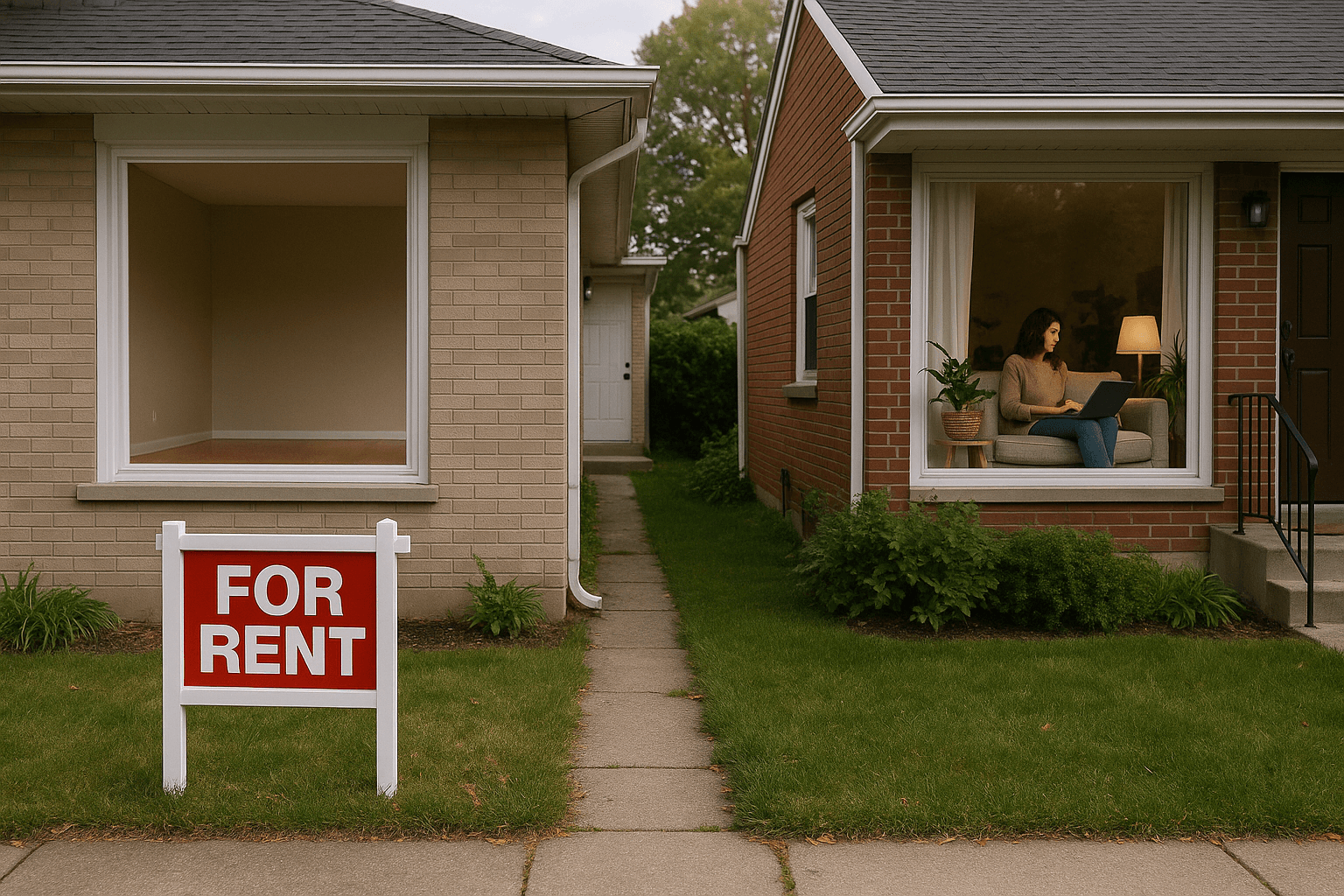
Vacancy rate is the percentage of time a rental unit sits unoccupied. A vacancy rate of 8% means a property is expected to sit empty for roughly 8% of the year - about one month out of every 12.
It is expressed as a percentage and applied to gross rental income:
Effective Gross Income = Gross Rent x (1 - Vacancy Rate)
Example: $1,800/month gross rent with an 8% vacancy allowance: $1,800 x 12 = $21,600 annual gross rent $21,600 x (1 - 0.08) = $19,872 Effective Gross Income (EGI)
That $1,728 difference is not a rounding error - it is almost $2,000 per year that needs to come from somewhere if you have not budgeted for it.
What Causes Vacancy?
Vacancy is not just about not having a tenant. It includes:
Turnover time: When a tenant moves out, there is almost always a gap before the next tenant moves in. Cleaning, minor repairs, showings, application screening, lease execution - even an efficient landlord needs 2-4 weeks. A less efficient one might need 6-8 weeks.
Renovation periods: If a unit needs work between tenants, it can sit vacant for weeks or months during the rehab.
Eviction: An eviction can keep a unit legally tied up for 1-4 months depending on state law and court schedules - during which you collect no rent.
Seasonal demand: Some markets have strong seasonal rental demand (college towns, resort areas, Sun Belt markets with winter migration). Off-season vacancies can be higher.
Market conditions: High local vacancy rates reflect weak rental demand. Oversupplied markets - too many units relative to renters - produce structural vacancy that is hard to overcome regardless of how well you manage.
How to Estimate Vacancy for a Specific Property
Using a blanket 5% or 10% is better than nothing, but a market-specific estimate is far more accurate.
Research local vacancy data:
- U.S. Census Bureau American Community Survey includes rental vacancy rates by metro and county
- HUD (Department of Housing and Urban Development) publishes local vacancy data
- Local property management companies often know their market's average vacancy cold - ask them directly
- Zillow and Rentometer show days on market for comparable rentals, which gives you an indirect vacancy signal
Rule of thumb by market type:
- Tight urban markets with strong demand: 3-5%
- Typical suburban and mid-size city markets: 6-8%
- Slower markets, smaller cities, rural areas: 8-12%
- High-risk markets (job loss, population decline): 12%+

Conservative underwriting: When in doubt, use a higher vacancy assumption. If the deal still works at 10% vacancy, you have a margin of safety. If it only works at 2%, you are one bad market cycle away from a problem.
Vacancy vs. Credit Loss: A Related Concept
In commercial real estate analysis, investors often separate physical vacancy (unit is empty) from credit loss (tenant is present but not paying rent).
In residential analysis, these are usually combined into a single "vacancy and credit loss" allowance - typically 5-10% of gross income.
For conservative residential underwriting, using 8-10% covers both scenarios: units sitting empty between tenants and occasional months where rent is late or unpaid during an eviction process.
How Vacancy Affects NOI and Cap Rate
Vacancy is not just a cash flow concern. It flows through to NOI - and NOI determines property value.
If a seller presents you with a property's financials using 0% vacancy, they are showing you an inflated NOI. That inflated NOI produces an inflated cap rate calculation, which may cause you to overpay.
Example:
- Gross rent: $24,000/year
- Seller's NOI (0% vacancy): $14,000 (cap rate at $200,000 = 7%)
- Your NOI (8% vacancy): $12,080 (cap rate at $200,000 = 6%)
At the seller's asking price, you thought you were buying a 7% cap rate. You are actually buying a 6% cap rate. If market cap rates are 6.5%, this property is overpriced for its actual income.
Always apply your own vacancy assumption to any deal you analyze - never use the seller's number without scrutiny.
Reducing Vacancy: Operational Strategies
Once you own a property, you can actively manage vacancy risk.
Price rent at market, not above it: The most common cause of extended vacancy is overpriced rent. A unit sitting at $1,900/month while market is $1,700 may produce a few months of lost rent that exceeds any monthly premium you would have captured.
Start marketing before the unit is vacant: When a tenant gives notice, list the unit immediately. Do not wait until move-out day to start showing it.
Offer lease renewal incentives: Small incentives (a modest rent freeze for one year, a minor upgrade) to retain good tenants cost far less than a vacancy turnover.
Screen well so tenants stay longer: The best vacancy strategy is keeping great tenants. Thorough screening - income verification, rental history, references - dramatically improves tenant retention.
Final Thoughts
Vacancy is not an edge case or a worst-case scenario. It is a normal, recurring cost of owning rental property. Every property you analyze should include a vacancy allowance - and that allowance should be grounded in real local market data, not optimism.
Build it in before you buy, and vacancy becomes a manageable cost you planned for. Ignore it, and it becomes a surprise that erodes your returns every time a tenant moves out.
Enjoyed this article?
Get our free starter kit and more guides like this.