Real Estate Wholesaling for Beginners: How to Make Money Without Buying Property
Wholesaling is the entry point into real estate investing that requires no license (in most states), no money to buy property, and no landlord responsibilities. Instead, you earn a fee for finding deals and connecting sellers with buyers. Done right, your first wholesale deal could earn you $5,000 - $20,000 - and experienced wholesalers regularly earn six figures a year.
Here's exactly how it works.
What Is Real Estate Wholesaling?
Wholesaling is a three-step process:
- Find a distressed property being sold below market value by a motivated seller
- Lock it up under contract at a price that leaves room for profit
- Assign or double-close the contract to a cash buyer for a fee
You're the middleman. The seller gets a fast, hassle-free sale. The buyer gets a deal they couldn't find themselves. You get paid for the work of finding and negotiating it.
You never own the property. You never need a down payment or a loan. Your commodity is deal flow.
The Wholesaling Process, Step by Step
Step 1: Find a Motivated Seller
Wholesaling only works with motivated sellers - people who need to sell quickly, are behind on payments, have inherited a property they don't want, or own a distressed property they can't afford to fix up.
Where to find them:
- Pre-foreclosure lists: Available through county courthouse records, data services like PropStream or BatchLeads. These are homeowners who've received a Notice of Default - they're behind on payments and often desperate.
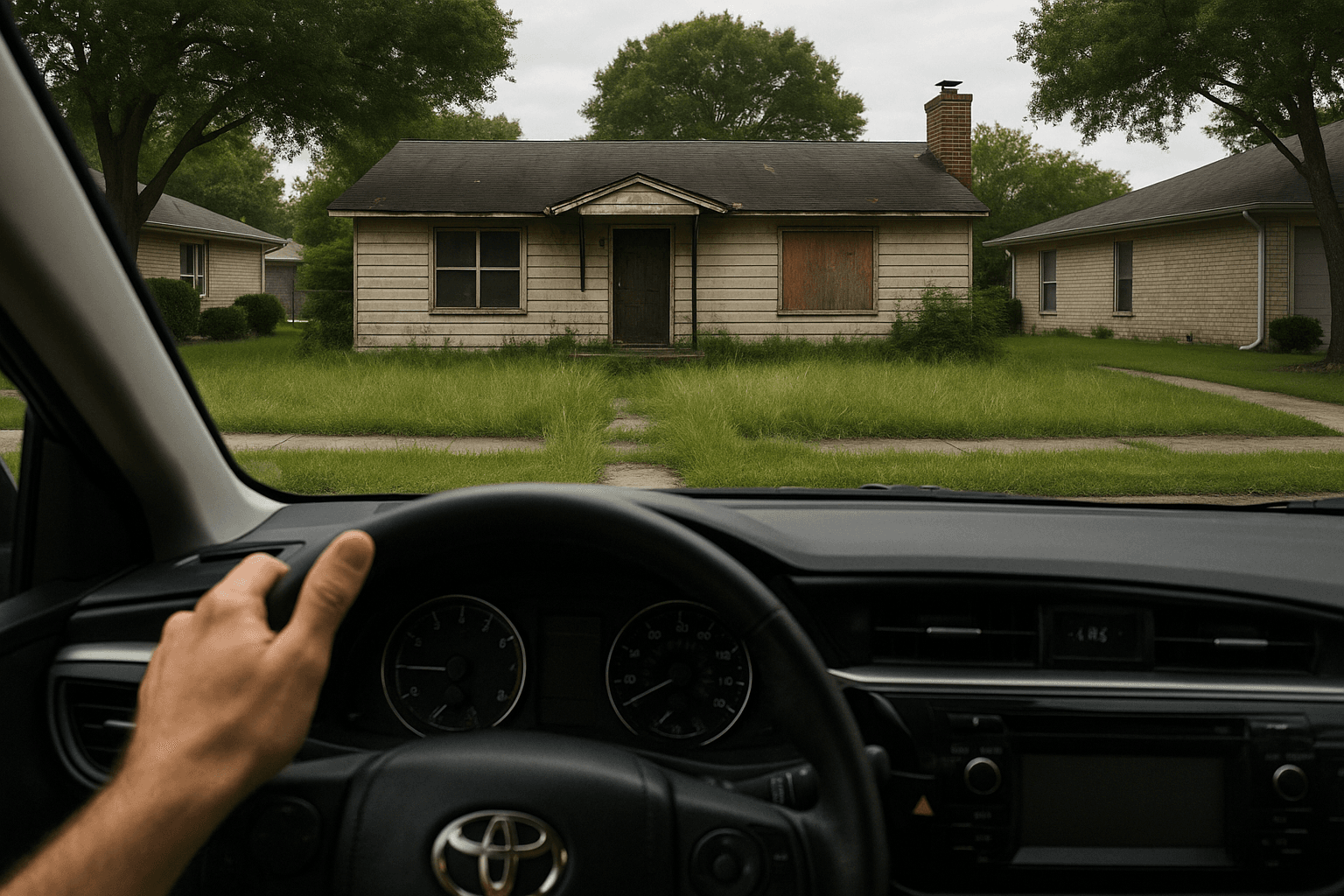
- Driving for dollars: Drive neighborhoods looking for visibly distressed properties - overgrown lawn, boarded windows, mail piling up, deferred maintenance. Note the address and find the owner through county tax records.
- Direct mail: Send postcards or letters to absentee owners, tax-delinquent owners, or probate properties. Message: "I buy houses fast, any condition, cash."
- Bandit signs / online ads: "We Buy Houses" signs in strategic locations or online ads targeting your market.
- Networking: Other wholesalers, foreclosure attorneys, probate attorneys, divorce attorneys. All deal with motivated sellers regularly.
Step 2: Analyze the Deal
Before making any offer, you need three numbers:
ARV (After Repair Value): What will the property sell for after it's fully renovated? Look at comparable sales within 1 mile, similar size, condition, and features. This is your ceiling.
Repair Estimate: Get a rough estimate of what it costs to bring the property to sellable condition. If you can't assess this yourself, bring a contractor or experienced investor with you.
Maximum Allowable Offer (MAO):
MAO = (ARV × 70%) - Repair Costs - Your Wholesale Fee
The 70% rule protects your buyer's margin. Experienced fix-and-flip investors typically won't pay more than 70% of ARV minus repairs.
Example:
- ARV: $200,000
- Repairs: $30,000
- Wholesale fee target: $10,000
- MAO = ($200,000 × 0.70) - $30,000 - $10,000 = $100,000
If you can get it under contract at $100,000 and sell to a flipper for $110,000, you earn $10,000.
Step 3: Make the Offer and Get Under Contract
Once you've done your numbers, make a written offer. Be direct and honest with the seller about what you're doing - you're a real estate investor who buys distressed properties, you'll close quickly, and you may assign the contract.
Your purchase agreement should include:
- The purchase price
- An assignment clause (allows you to transfer your buyer position to another party) - or use the phrase "and/or assigns" next to your name as the buyer
- A reasonable inspection period (7 - 14 days is common for wholesalers)
- A closing date that's realistic for your buyer to fund (typically 2 - 4 weeks)
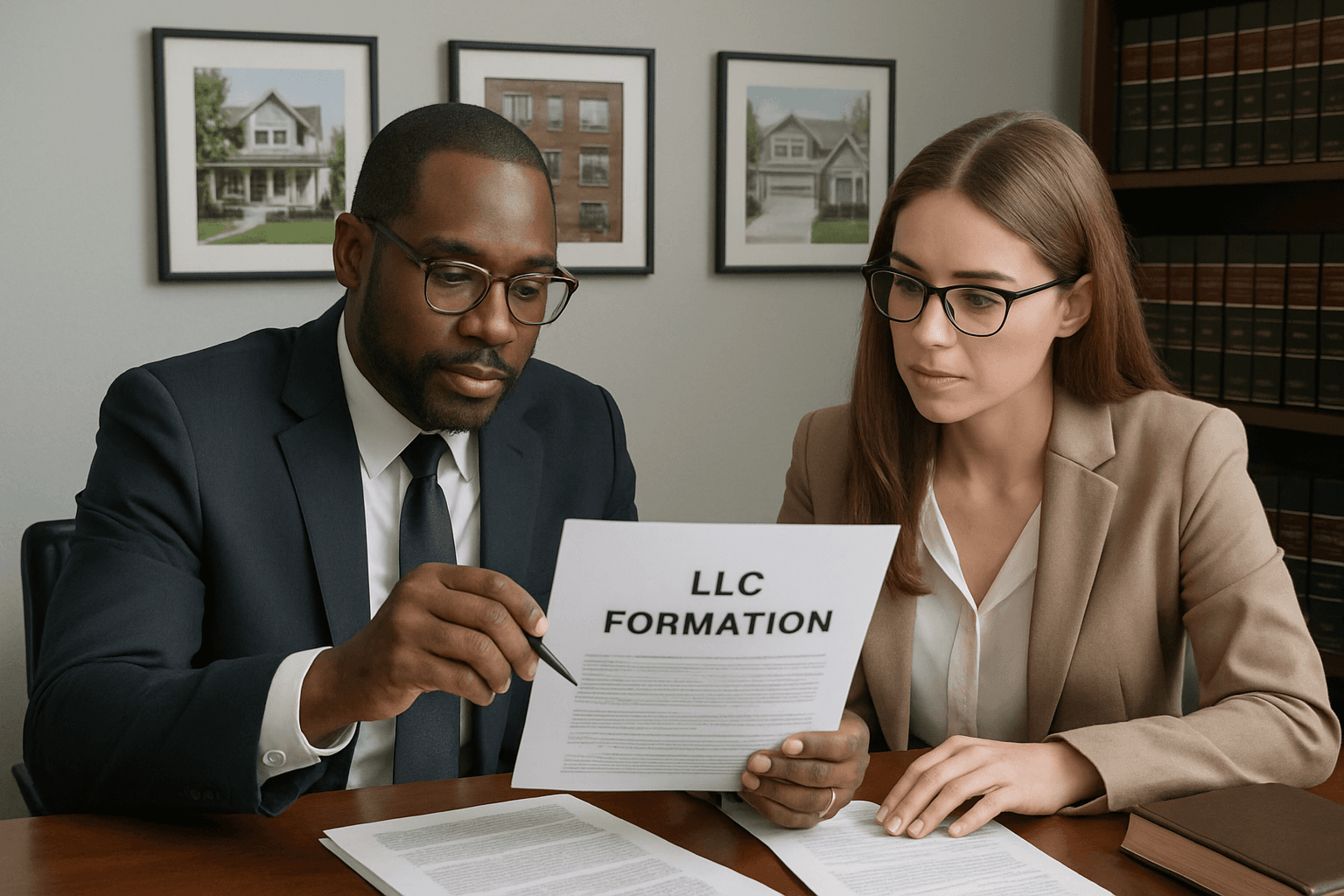
Important: Use a real estate attorney to review your contract at least once. Wholesaling laws vary by state - some require a real estate license to wholesale certain property types.

Step 4: Find Your Buyer
Your cash buyer is typically a fix-and-flip investor or a landlord looking for a deal. To build your buyer list:
- Attend local real estate investor meetups (search BiggerPockets or Meetup.com)
- Post properties in local real estate investor Facebook groups
- Contact "We Buy Houses" ads in your area - those are your buyers
- Network at foreclosure auctions (the people bidding are cash buyers)
- Work with other wholesalers who can add you to their buyer list
The faster you assign, the better. Once you have a buyer expressing interest, get them signed on an assignment agreement immediately. Don't let deals linger.
Step 5: Close the Deal
Assignment of Contract: You assign your purchase contract to your end buyer. They pay the purchase price to the seller, and separately, they pay you your assignment fee at closing. Simple, fast, clean.
Double Close: In some states or situations, you instead buy the property yourself (using transactional funding - a same-day, short-term loan) and immediately resell it to your buyer on the same day. This hides your assignment fee from both parties. More complex and slightly more expensive, but sometimes necessary.
What Does a Wholesale Fee Look Like?
There's no standard. Common ranges:
- Entry-level deals: $3,000 - $8,000
- Mid-level deals: $8,000 - $20,000
- Exceptional deals: $20,000 - $50,000+
Your fee is simply the difference between what you have the property under contract for and what you sell that contract to your buyer for. The bigger the gap, the bigger your check.
Is Wholesaling Legal?
Yes - with caveats. Wholesaling is legal in all 50 states. However:
- Several states have passed laws requiring a real estate license to wholesale (notably Illinois and Oklahoma)
- Some states require disclosure that you're a wholesaler or that you're not the property owner
- "Equitable marketing" laws in some states restrict marketing a property you don't own
Always check your state's specific laws and work with a real estate attorney. This is not an area to wing it.
The Realities of Wholesaling
It's not passive. Wholesaling is an active hustle - you're constantly generating leads, making offers, and working your buyer list. Think of it as running a small business, not investing passively.
Most leads don't convert. Expect to analyze 50 - 100 properties to get one under contract. The conversion funnel is wide.
It takes 30 - 90 days to close a first deal. Budget your time and energy accordingly.
Marketing costs money. Even though you don't buy property, you'll spend money on data (PropStream, BatchLeads), direct mail, and driving expenses.
Relationships matter enormously. The best deals come from your buyer network knowing your deal quality and calling you first. Build your reputation for bringing real deals, not overpriced garbage.
When Wholesaling Leads to Buying
Many successful buy-and-hold investors started as wholesalers. The skills you build - finding distressed sellers, estimating repairs, understanding values - are exactly the skills you need to identify deals you'll want to keep for yourself.
Once you accumulate some capital from wholesale fees, you're perfectly positioned to start buying and holding the deals you'd otherwise assign.
Final Thoughts
Wholesaling is the lowest-barrier entry into real estate investing - but "low barrier" doesn't mean easy. It takes consistent marketing, sharp analytical skills, and a growing network of buyers and sellers.
The payoff for those who commit: a scalable, high-income real estate business that requires zero of your own capital and produces cash that can eventually fund a buy-and-hold portfolio.
Enjoyed this article?
Get our free starter kit and more guides like this.